Productive Diplomacy: Iraq Leveraging Its Strategic Position
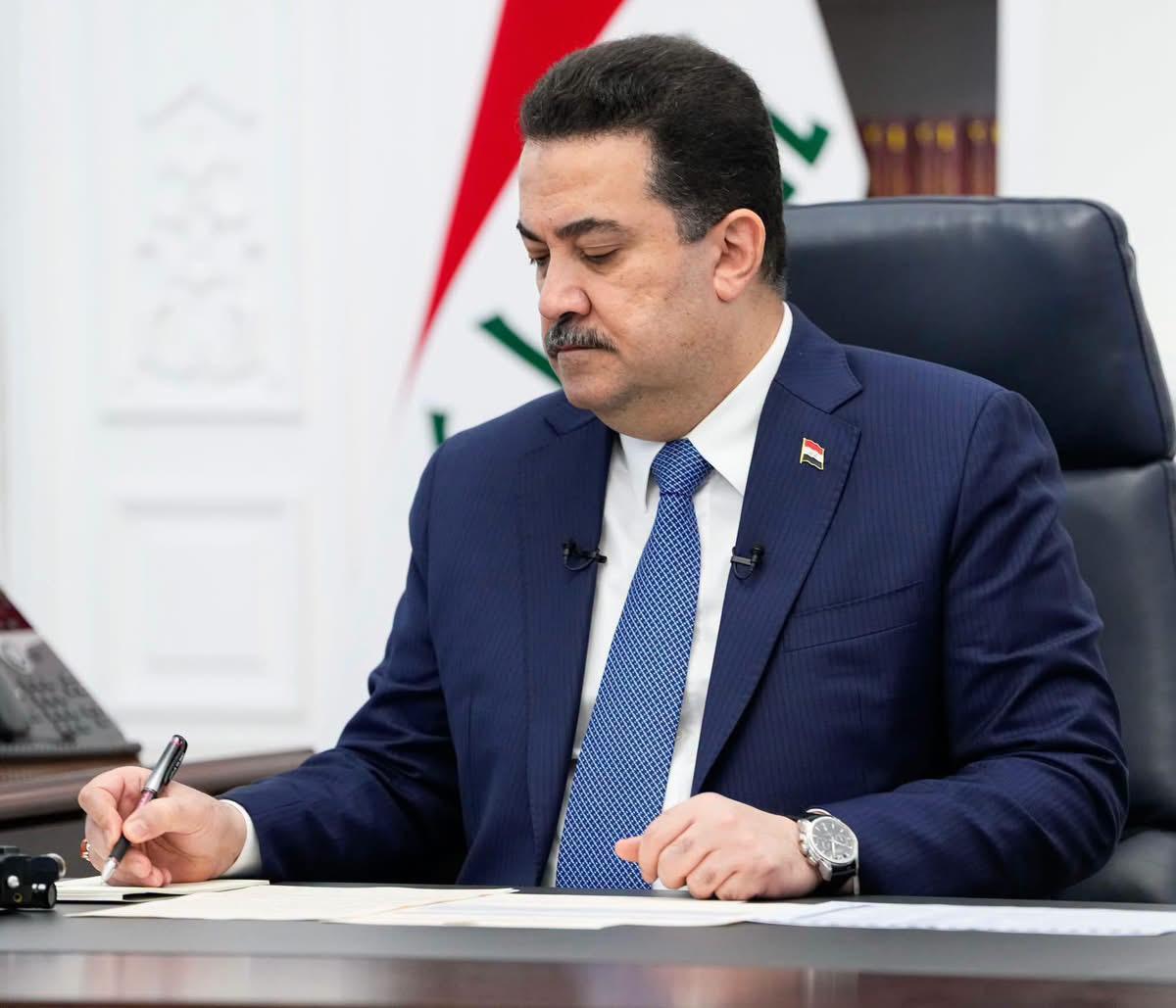
Mohammed Shia’ Al-Sudani
Former Prime Minister of the Republic of Iraq
When our government was formed, we understood that Iraq stood before a historic opportunity to redefine its position within its regional and international environment. The challenge before us was not limited to addressing economic, public service, and development issues; it also concerned how to build foreign relations that support the state-building project, safeguard Iraq’s interests, and open new horizons for its economy.
From the outset, we proceeded from a fundamental conviction: foreign policy should not be detached from the needs of the economy and development, and diplomatic relations derive their full value not merely from meetings, statements, and political positions, but from the shared interests they generate, the investment opportunities they create, the partnerships they foster, the trade corridors they establish, and the understandings they build to strengthen Iraq’s stability and standing.
Our foreign policy has been based on balance, non-alignment with competing blocs, and openness to all parties according to the principles of mutual interests and mutual respect. Our objective has been for Iraq to act as an effective partner rather than a venue for settling regional rivalries, and to transform its geographic location from a factor that historically imposed burdens upon it into a source of strength and economic opportunity.
It was from this vision that the concept of productive diplomacy emerged. We did not want diplomacy to remain confined to its traditional framework; rather, we sought to connect it directly to the interests of the Iraqi people and the future of their economy. A relationship with one country may open the door to investment; a relationship with another may establish a trade corridor; while a third partnership may contribute to the development of energy, industry, agriculture, or transportation. In this way, diplomacy becomes an instrument of development, while the economy becomes one of the driving forces of foreign relations.
The Development Road Project is perhaps the clearest embodiment of this philosophy. From the moment it was launched, we did not view it merely as a railway line or a transport network connecting one point to another. Rather, we saw it as a project capable of redefining Iraq as a link between East and West, between the economies of the region and global markets, and as a platform for creating new industries, services, economic zones, and investment opportunities.
For this reason, we ensured that diplomacy remained present throughout every stage of developing the project. The Development Road required regional understandings, economic partnerships, and political dialogue with neighboring countries and with states concerned with global trade flows. The quadrilateral agreement between Iraq, Türkiye, Qatar, and the United Arab Emirates represented one of the important frameworks that contributed to establishing cooperation around the project. At the same time, we have consistently emphasized that the Development Road is not a closed project, but an open platform for every partner wishing to contribute on the basis of mutual interests.
At the same time, the Development Road has provided Iraqi diplomacy with a new source of leverage. Iraq no longer engages with its regional environment solely from the standpoint of seeking partnership with others, but also from the position of possessing a project in which the interests of multiple countries can intersect. This is the equation we have sought to consolidate: Iraq must have something of value to offer its partners; its geography must become an economic asset; and its economy must become an instrument for strengthening its political position.
This perspective also underpinned our focus on the Grand Faw Port and its connection to the Development Road. Together, the port and the road constitute an integrated system capable of giving Iraq the opportunity to transform its economy from one that remains heavily dependent on oil into one that benefits from transit trade, logistics services, industry, and investment.
Experience has shown that shared economic interests are capable of building more sustainable relationships. When states have mutual interests in a strategic project, dialogue between them is no longer tied to a temporary political circumstance, but instead becomes part of a long-term vision.
In this context, the importance of investment extends beyond its immediate economic impact. The expansion of economic interests and the presence of major projects in Iraq create a network of international and regional interests linked to the country’s stability, making Iraq’s security and stability a shared interest among its partners. The broader these interests become, the greater Iraq’s ability to protect its security gains and to act with confidence within its regional environment.
Security that is not supported by a strong economy remains vulnerable to disruption, and stability that does not generate opportunities and development remains incomplete. Therefore, protecting the stability that has been achieved cannot be pursued through security measures alone; it must also be reinforced economically. Building a productive economy, attracting capital, developing industry, and expanding trade are all integral components of national security in its broader sense.
Iraq today has an opportunity to become a major industrial and investment hub for the countries of the region and the wider world. What is required is to seize this opportunity with the mindset of a state that seeks to make its economy a pillar of stability and influence.
What has been established during the previous period should not come to a halt with changes in government. Rather, it must evolve into a permanent approach within the Iraqi state. Continuing to attract investment, expand partnerships, and complete strategic projects constitutes a path that should not be tied to a particular government or political phase, but should instead form part of the broader effort to build Iraq’s economic and political strength.