Baghdad and Erbil: Towards a New Era of Partnership in State-Building
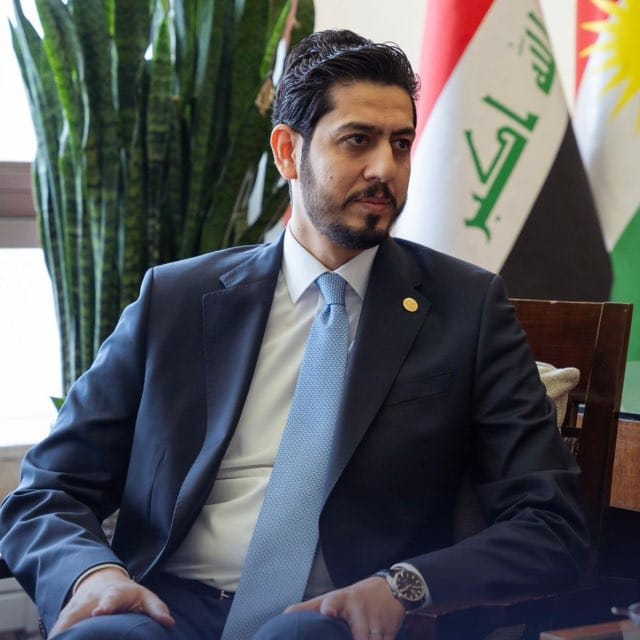
Yousif Al-Muhsin
Chairman of the Iraqi Group for Foreign Affairs
In politics, the significance of speeches is not confined to their content. It also extends to the language in which they are delivered, the place where they are given, and the audience they address. From this perspective, the speech delivered in Arabic in Baghdad by Kurdistan Region President Nechirvan Barzani can be viewed as more than a speech marking a national occasion. It carries a political message concerning the Region’s position within the Iraqi state, the nature of the relationship it seeks to build with Baghdad, and the role it seeks to play in shaping Iraq’s future.
Since the formation of Prime Minister Ali Al-Zaidi’s government in May 2026, the Kurdistan Region President’s presence in Baghdad has become increasingly prominent, beginning with his participation in the parliamentary session granting confidence to the government, followed by his attendance at the State Administration Coalition meeting, and culminating in his participation in the Sovereignty Day conference.
This presence has come at a moment when questions of sovereignty, weapons control, and the Baghdad–Erbil relationship intersect with discussions over the future of the partnership with the United States and Iraq’s position amid rapidly evolving regional transformations.
In this context, the President of the Region’s choice to speak in Arabic carries a significance that goes beyond addressing the audience in their own language. It appears to seek to broaden his political role—from that of a regional president negotiating outstanding issues with Baghdad to that of a Kurdish partner articulating a vision for the future of the Iraqi state. Language, in this sense, is an entry point to the message, while the substance concerns how to build a stable federal state, organize the exercise of power within it, and define its external relations.
When the President of the Region tells the country’s leaders and representatives of the international community that “Iraq is our shared responsibility,” he offers a definition of Kurdistan Region’s place within the broader national responsibility. This meaning is reinforced by his affirmation that the Region will support every effort aimed at strengthening Iraq’s sovereignty, security, and stability, as well as by his call for outstanding issues to be addressed within the “Iraqi house” and in accordance with the Constitution. Such language gives the speech a broadly Iraqi character and expands its focus to encompass the state, its institutions, and its future.
The importance of this approach lies in linking the rights of the Region to the nature of the state that should govern all Iraqis. His vision of “a constitutional, federal, stable Iraq enjoying full sovereignty” presents federalism as an element of Iraqi state-building. In doing so, the speech opens space for moving beyond a longstanding dilemma in Baghdad–Erbil relations: the assumption that strengthening state authority necessarily comes at the expense of the Region, or that expanding the Region’s constitutional powers weakens the state.
A federal state can combine strong federal institutions with respect for the constitutional powers of its regions when the relationship between the two sides is based on clear and stable rules. From this perspective, the message seeks to redefine the concept of power within Iraq: Baghdad’s strength lies in its ability to govern the state and enforce the Constitution, while Erbil’s strength lies in the stability of its constitutional position and its participation in national decision-making. Together, these elements can make both sides better equipped to confront shared challenges.
The Constitution, in this framework, performs a fundamental political function. It serves as a reference point for the unity of the state and the organization of its authority, while also safeguarding the federal system and the rights of the Region.
Therefore, the call for a strong state acquires its full meaning when accompanied by the implementation of the Constitution in regulating Baghdad–Erbil relations and resolving financial, administrative, and security disputes through state institutions. State strength, in this sense, becomes linked to its ability to accommodate and organize its diversity, transforming partnership into a sustainable institutional practice.
This approach points to an attempt to establish the relationship on the basis of shared success, whereby the stability of the Region becomes part of Iraq’s stability, and the strength of the state becomes a guarantee for a more balanced partnership.
The most sensitive message in the speech, however, concerns the authority over military decision-making. The assertion that the state must have the final say over war and peace touches upon the core of Iraq’s current dilemma: the ability of constitutional institutions to regulate the use of force and prevent multiple actors from possessing the capacity to draw the country into confrontation or expose it to the consequences of regional conflicts.
In this context, the speech’s reference to weapons outside state authority is particularly significant, as it shifts the sovereignty debate toward the practical capacity to make and enforce decisions. Sovereignty remains incomplete when the decision to use force is not fully subject to the constitutional institutions of the state.
At the same time, the President of the Region praised the sacrifices of the Iraqi Army, the Popular Mobilization Forces, and the Peshmerga forces. This gives his position a carefully calibrated political formulation, combining recognition of the roles played by forces that fought ISIS with an affirmation of the constitutional authority of the state in managing the use of force. This balance allows the issue of weapons to be addressed through the lens of the organization of authority and responsibility, while preserving recognition of the sacrifices made by those who fought in defense of Iraq.
This vision also extends to Iraq’s relationship with the United States and the international community. The speech treated the withdrawal as an opportunity to reshape the partnership and called for a transition from a relationship built primarily around the war on terrorism toward long-term cooperation encompassing security, the economy, investment, energy, education, technology, and diplomacy. This reflects an understanding that the next phase requires transforming military cooperation into broader interests that strengthen Iraq’s stability and institutional and economic capacities.
Through this approach, the speech presents the Kurdistan Region as a contributor to shaping Iraq’s foreign policy and conveys to international partners the message that a stable federal Iraq can be a reliable partner. Domestically, it places the Kurdistan Region within Iraq’s national security framework, a direction that is consistent with efforts to unify the Peshmerga forces and strengthen coordination between them and the federal security forces, while recognizing the importance of translating such coordination into clear institutional arrangements.
The call to keep Iraq away from conflicts also carries a regional message. The emphasis on mutual interests in relations with neighbors and friends can be interpreted as a call to subordinate external alignments to national interests and state sovereignty. This call carries particular weight at a time of growing pressures on Iraq, when the country’s ability to control its internal decision-making becomes a condition for safeguarding its external relations.
Nevertheless, the significance of the speech does not mean that the transformation it reflects has been completed. However indicative the speech may be of a shift in the nature of the relationship, it does not mean that the structural disputes between Baghdad and Erbil have been resolved, nor that the new partnership has become a fully institutionalized reality.
Moving from negotiations over outstanding issues toward participation in shaping the state’s future requires reciprocal commitments, implementable settlements, and a level of trust that extends beyond political occasions.
Likewise, the call for the state to retain exclusive authority over decisions of war and peace requires arrangements encompassing all armed actors and defining their responsibilities and relationship with constitutional institutions. At the same time, the Baghdad–Erbil partnership requires rules capable of protecting it from fluctuations in political alliances and recurring crises.
The President of the Region used Arabic to address Baghdad, but the substance of his speech posed a question that goes beyond Baghdad to Iraqis as a whole: How can a state be built that brings together sovereignty and partnership, power and constitutionalism, unity of decision-making and respect for pluralism?
This may be the most important message of the speech. The position of the Kurdistan Region in Iraq’s future will not be determined solely by the rights and powers it secures, but also by the extent to which it contributes to bearing responsibility for the state, participates in resolving its crises, and adheres to the constitutional rules to which all sides are called to submit.
Conversely, the strength of the Iraqi state will not be measured solely by its ability to assert its authority, but also by its ability to build a stable federal partnership that accommodates diversity, protects rights, and unifies sovereign decision-making within constitutional institutions. Between these two paths, the relationship between Baghdad and Erbil can move from the continuous management of disputes toward a genuine partnership in building Iraq’s future.