The «3×3 to Safeguard One Iraq»: Theory My Vision for Governing the Iraqi State, (2014–2018).
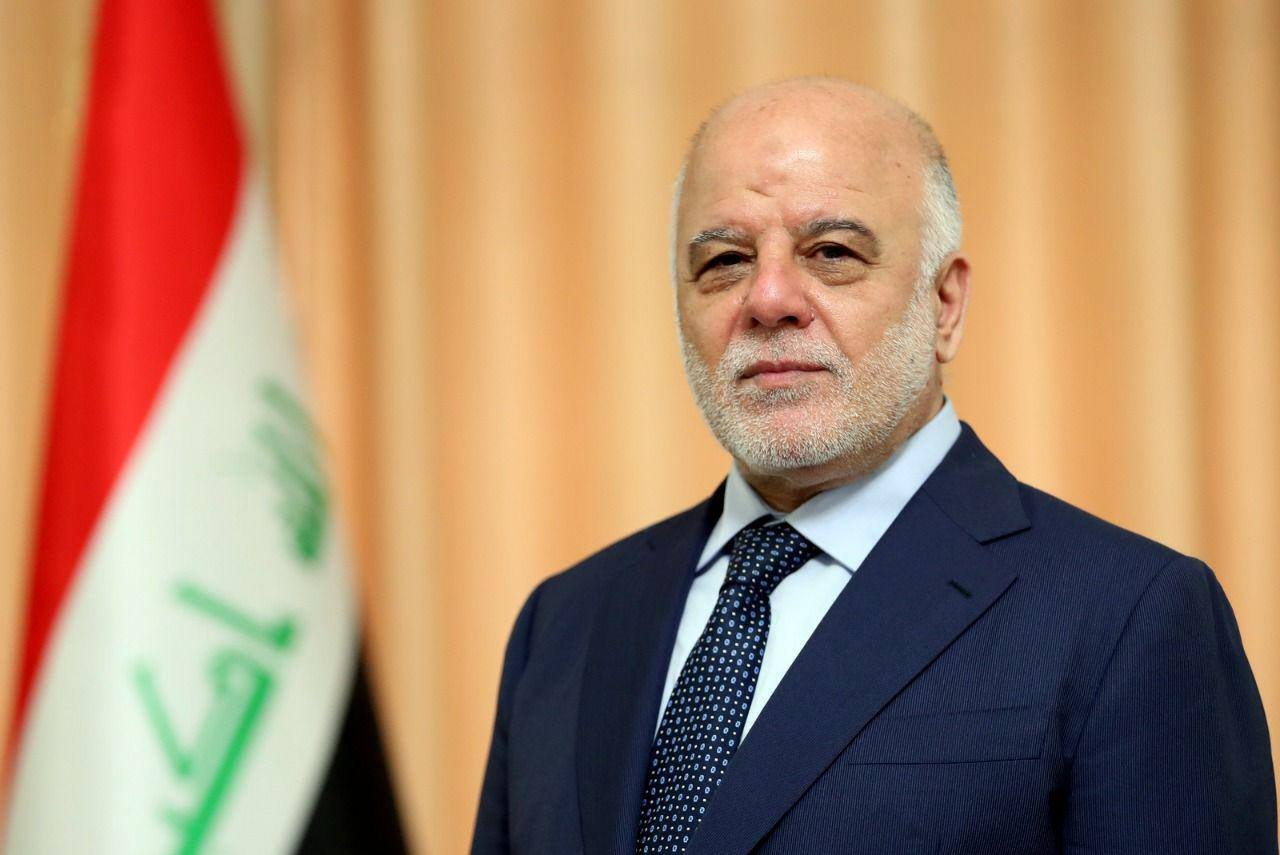
Dr. Haider Al-Abadi
Former Prime Minister of Iraq
Introduction: The State in the Face of an Existential Threat
When I assumed the office of Prime Minister in 2014, Iraq was not undergoing an ordinary political transition, nor was my government confronting the kinds of challenges faced by a stable state that could be addressed through conventional instruments of governance. I inherited a state facing a complex existential threat in which war intersected with financial collapse, political division with social fragmentation, and external interference with institutional weakness.
The terrorist organization ISIS controlled nearly one-third of Iraq’s territory. Mosul, along with numerous cities, provinces, and major border crossings, had fallen beyond state control, while the threat drew dangerously close to Baghdad, Erbil, Karbala, and Samarra. Since the beginning of 2014, the war had displaced nearly six million Iraqis—around 15 percent of the country’s population—in one of the largest displacement crises in modern Iraqi history.
At the same time, the price of oil fell below $30 per barrel, after having exceeded $100 for several preceding years, in an economy whose public budget depended almost entirely on oil revenues. Yet the state was simultaneously required to finance a large-scale war, pay the salaries of millions of people, provide relief to the displaced, and sustain essential services and public institutions.
The government also inherited a critical financial situation, with a shortfall in available liquidity of approximately $3 billion and accumulated obligations exceeding the Treasury’s capacity to meet them. A collapse of public finances was not merely an economic threat; it would have meant an inability to pay salaries, a breakdown in public services, and the collapse of the domestic front at the height of the war.
Iraq was also an open arena for competition among regional and international powers. The prospect of partition, or of Iraq being transformed into competing zones of influence, had become a real possibility rather than merely a political warning.
Thus, the question I faced was not simply: How do we govern Iraq? The more urgent and fundamental question was:
How do we preserve Iraq’s very existence first, and then rebuild its capacity, unity, and standing?
It was from this challenge that my approach to governance took shape in what I called:
The “3×3 to Safeguard One Iraq” Theory
The theory rests on the premise that preserving a unified Iraq required simultaneously overcoming six existential challenges:
Three internal challenges: liberation and unity, economic resilience, and achievable reform.
Three external challenges: convergence, openness, and centrality.
The outcome of this equation was:
One Iraq: one territory, one people, one state, one sovereignty, and one national decision.
These challenges were not independent of one another. There could be no liberation without an economy capable of financing it; no resilient economy without political stability; no meaningful reform in a disintegrating state; no independent foreign policy without internal unity; and no sustainable unity if Iraq became subordinate to a regional or international axis.
Any serious failure in managing this equation could have meant losing the battle for the state, even if a partial victory had been achieved on one of its fronts.
First: The Internal Existential Challenges
- The Challenge of Liberation: Liberating the Land and the People while Protecting Social Unity
ISIS’s occupation of Iraqi territory was not merely an adventurous military incursion. It was an organized and supported project aimed at destroying Iraq as a state, fragmenting its society, establishing a terrorist entity on its ruins, or transforming it into fragmented statelets and geopolitical protectorates.
For this reason, the liberation strategy was not built solely around recovering territory. It rested on three interrelated objectives:
Liberating the land and restoring national sovereignty to the state.
Liberating the people from terrorism, fear, and displacement.
Preventing the war of liberation from becoming a civil war or a campaign of sectarian revenge.
The most serious challenge was rebuilding the armed forces after the collapses of 2014 and unifying the military and security effort among the Iraqi Army, the Counter Terrorism Service, the Federal Police, the Popular Mobilization Forces, the Peshmerga, and local forces under a single national objective, while benefiting from the support of the international coalition without relinquishing Iraq’s leadership of the battle.
By July 2017, the international coalition included 73 countries and organizations. Twenty-six of its members had deployed more than 9,000 military personnel for training and support, while more than 106,000 members of various Iraqi security forces had received training as part of coalition efforts.
Yet the foundation and essence of the victory remained Iraqi: Iraqi decision-making, Iraqi sacrifice, Iraqi leadership, and Iraqi forces on the ground.
The liberation strategy was based on a number of core principles:
Unity of command and purpose despite the multiplicity of participating forces.
Protection of civilians and combatants and reduction of casualties to the greatest extent possible.
Restoration of state institutions immediately after cities were liberated.
Restoration of services and preparation for the return of displaced populations.
Prevention of revenge and demographic change.
A clear distinction between terrorism and the social communities whose areas ISIS had occupied.
Treating liberation as the restoration of the citizen, not merely the recovery of geography.
On 10 December 2017, Iraq officially declared the liberation of all its territory from ISIS control. By the end of that year, more than 2.8 million displaced Iraqis had returned to their areas of origin.
By the end of 2018, the number of stabilization projects in liberated provinces had reached 3,102, of which 1,672 had been completed, benefiting more than five million citizens, according to statistics from the United Nations Development Programme.
The true victory went far beyond the defeat of a terrorist organization. Iraq succeeded in liberating its territory while preserving the national framework of the state and preventing the war against ISIS from becoming a war between Shi’a and Sunni communities, between Arabs and Kurds, or an open regional proxy confrontation.
- The Challenge of Economic and Financial Resilience: Financing Both the State and the War
Between 2014 and 2018, Iraq faced what may be described as a “double war”: a military war against ISIS and an economic war against bankruptcy.
The expansion of terrorism coincided with a sharp decline in oil prices and the loss of oil exports from the north as a result of ISIS occupation. Revenues fell just as expenditures on defense, security, humanitarian relief, and reconstruction of liberated areas increased substantially. The state had to finance the war, pay salaries, protect vulnerable groups, maintain government institutions, and prevent the collapse of the currency and markets.
Our economic policy operated on three levels:
A. Managing Scarcity
We reduced non-essential expenditure, reordered priorities, and directed available resources toward:
Financing the war effort.
Paying salaries and pensions.
Protecting the social safety net.
Providing food, medicine, and essential services.
Supporting displaced populations and restoring stability.
Maintaining the stability of the Iraqi dinar and the banking system.
B. Mobilizing Resources and International Support
Iraq engaged with international financial institutions to secure financing and technical support under conditions that protected the stability of the state. In July 2016, the International Monetary Fund approved a Stand-By Arrangement for Iraq worth $5.
34 billion to help the country address the fall in oil prices, the costs of war, and the need to strengthen public financial management.
World Bank Group commitments to Iraq also increased from around $600 million in 2014 to more than $4.7 billion by early 2018, financing stabilization, services, roads, bridges, electricity, water, and budget support. These programs helped improve services for more than one million people in seven liberated cities and supported the rehabilitation of roads and bridges serving more than 2.5 million Iraqis.
C. Moving from Resilience to Recovery
Economic policy was not limited to preventing collapse. It also sought to prepare the economy for the post-war phase through:
Improving financial management and oversight of public spending.
Increasing oil production and exports.
Preserving foreign reserves.
Repaying part of accumulated domestic obligations and debts.
Launching stabilization and reconstruction projects.
Restoring the confidence of international institutions and donor states.
Opening Iraq to investment and economic partnerships.
The result was that Iraq moved from a severe fiscal crisis that threatened the state at the height of the war to a substantial fiscal surplus in 2018. The International Monetary Fund confirmed that the overall budget recorded a surplus of approximately 7.9 percent of GDP, equivalent to around $17.7 billion based on the estimated size of the economy that year. Foreign reserves reached approximately $65 billion. Government debt also declined from 64.2 percent of GDP in 2016 to 49.3 percent in 2018.
According to calculations based on government liquidity and readily available balances, the government handed over a Treasury with a surplus of approximately $14 billion.
Thus, the Iraqi state moved from a critical cash position and an inability to finance its obligations in 2014 to an improving financial position and a significant surplus in 2018, after financing one of the most severe wars in Iraq’s modern history.
- The Challenge of Achievable Reform: Strengthening the System from Within
Iraq needed deep reform at the same time that the state was fighting a war for survival. Reform under conditions of near-collapse, however, could not be pursued through a leap into the unknown, because dismantling institutions all at once would have destroyed what remained of the state’s capacity.
I therefore adopted the concept of achievable and cumulative reform: pursuing the maximum degree of reform possible without exposing the state to collapse or undermining its ability to conduct the war.
This approach included:
Reducing the size of the executive branch and streamlining government.
Reducing senior-level privileges and expenditures.
Combating the phenomenon of fictitious employees and soldiers, known in Iraq as “ghost employees.”
Rebuilding the military establishment on professional foundations.
Introducing electronic and biometric payment and registration systems and automation.
Improving the management of public finances.
Strengthening oversight and integrity mechanisms.
Simplifying government procedures.
Restoring the role of competence and technocratic expertise.
Laying the foundations for reform of the banking and investment sectors.
Expanding social protection to mitigate the effects of war and austerity.
In 2015, the number of ministries was reduced from 33 to 22 as part of an effort to streamline government and reduce administrative bloating.
I did not view reform as a slogan or as an exercise in political purging. I regarded it as a gradual process of rebuilding state capacity. For this reason, it is necessary to distinguish between two things:
Winning the challenge of reform, in the sense of preventing the system from collapsing and opening an institutional path toward reform.
Completing reform, which is a historic objective that could not have been fully achieved within four years marked by war, financial crisis, and political resistance.
As a result of these policies, Iraq entered sovereign credit-rating assessments for the first time and, due to genuine reforms and results achieved on the ground, secured a significant assessment when measured against the security, financial, political, and economic conditions prevailing at the time. This was an important indicator of the Iraqi economy’s health despite war and declining oil revenues.
We succeeded in advancing achievable reform, but we never claimed to have eliminated corruption, political quota-sharing, or structural imbalances. The real achievement was that state institutions recovered a measure of their capacity and that public administration moved from the brink of collapse toward the possibility of further development.
Second: The External Existential Challenges
- The Challenge of Convergence Rather than Conflict
Iraq found itself at the center of a regional and international struggle in which the interests of the United States, Iran, Türkiye, Saudi Arabia, the Gulf states, and other international powers intersected.
Had these powers become opposing fronts inside Iraq, the war against ISIS would have turned into a proxy war, exposing the country to partition or foreign tutelage.
Our policy was therefore based on a clear principle:
We bring external interests together around Iraq’s interests, and we do not allow them to clash on Iraqi soil.
Convergence did not mean eliminating disagreements among states. It meant preventing those disagreements from being transferred into Iraq and making use of areas of common interest to serve Iraqi and regional security, liberation, and stability.
Iraq benefited from the military, air, and training support provided by the United States and the international coalition, from the direct support Iran provided in confronting ISIS, and from cooperation with Türkiye, the Gulf states, and Arab countries—without joining a policy of regional axes or turning Iraq into a front against any other state.
This policy succeeded in building the broadest possible international support for the liberation campaign while ensuring that leadership and decision-making remained in the hands of the Iraqi state. The defeat of ISIS became a shared interest among competing powers rather than a reason for Iraq to become the battlefield of their rivalries.
- The Challenge of Openness rather than Isolation
Before 2014, Iraq suffered from a degree of Arab isolation, regional tensions, and an international image associated with war, violence, and division.
Our government therefore adopted a policy of balanced openness, rebuilding Iraq’s relations with its Arab, regional, and international environment not through diplomatic courtesies, but through mutual interests.
Iraq reached out to Saudi Arabia, Kuwait, Jordan, Egypt, Türkiye, Iran, and the Gulf states, while simultaneously developing its relations with the United States, the European Union, Russia, China, Japan, and international institutions.
Among the most important results of this policy were:
The establishment of the Iraqi-Saudi Coordination Council in 2017.
The revitalization of relations with the Gulf states and the broader Arab region.
The development of security and economic understandings with neighboring countries.
The expansion of partnerships with the World Bank, the International Monetary Fund, and industrialized countries.
The organization and hosting of international initiatives for Iraq’s reconstruction.
A shift in Iraq’s image from a state defined by crisis to a state of opportunity and partnership.
At the Kuwait International Conference for the Reconstruction of Iraq in February 2018, dozens of international partners, institutions, and companies came together to support Iraq’s transition from war to reconstruction. The significance of the conference was not limited to financial pledges. It also demonstrated the return of international confidence in Iraq and its readiness to attract investment and partnerships.
In my view, openness was part of national security. A state whose interests are deeply interconnected with its surroundings is better able to protect its independence than an isolated state.
- The Challenge of Centrality rather than Dependency
The objective was never for Iraq to move from one regional axis to another, or to replace one form of dependency with another. The goal was for Iraq to regain its position as a pivotal and active state in the region.
The concept of centrality rested on three meanings:
The central authority of the state within Iraq, without allowing partition or de facto statelets.
The independence of national decision-making from external axes.
The transformation of Iraq into a point of regional convergence rather than an arena of conflict.
This policy was tested at more than one critical domestic and external juncture, and it demonstrated its ability to preserve Iraqi unity and Iraq’s national role.
The Unity of the Theory: Why Did the Six Challenges Have to Be Won Together?
The experience of 2014–2018 cannot be understood by separating its outcomes.
Had the territory been liberated while the economy collapsed, the state would have fallen.
Had the economy survived while ISIS remained, Iraq would have lost its sovereignty.
Had military victory been achieved while civil war erupted, Iraq would have lost its social unity.
Had partition been prevented while Iraq became externally dependent, the country might have remained unified on the map but would have lost control over its own decisions.
Had Iraq opened itself to the world without maintaining a strong central state, openness could have become a channel for penetration.
Had reform been pursued in a manner that destroyed institutions during wartime, reform itself could have become a path to state collapse.
This is why “3×3” was a theory of managing the existential balance of the state, not merely a classification of policies.
The strength of foreign policy is derived from internal cohesion, while external relations provide the conditions for domestic resilience. Liberation protects the economy, and the economy finances liberation. Reform strengthens the state, and a strong state protects reform.
The outcome of the experience was: winning the battle for the state.
When I assumed responsibility in 2014, Iraq was:
Deprived of control over nearly one-third of its territory.
Threatened by partition and civil war.
Facing the displacement of millions of its citizens.
Suffering severe breakdowns in its security forces and institutions.
Facing a major financial crisis.
Caught at the center of intense regional and international competition.
Threatened with the loss of its unity, sovereignty, and independent decision-making.
When I handed over office in 2018, Iraq was:
Liberated from ISIS control over its territory.
Unified geographically and constitutionally.
Restoring federal control over territories and border crossings.
Having moved beyond the immediate danger of partition and ethnic conflict.
Preserving its social cohesion despite the severity of the war.
Possessing security forces that had been rebuilt and had acquired extensive operational experience.
Open to its Arab, regional, and international environment.
To a significant extent, free from the politics of regional axes.
Moving toward a role as a regional center and point of convergence.
Moving from fiscal deficit to a significant surplus.
Holding foreign reserves of approximately $65 billion.
Having reduced public debt from its wartime peak.
Entering a phase of recovery, reconstruction, and economic advancement.
Not all of Iraq’s problems had been resolved. Reform had not been completed, nor had the consequences of war disappeared. But the measure of success in that period was not the achievement of an ideal state. It was preventing the collapse of the state and then moving it from breakdown to stability, from occupation to liberation, from division to unity, from deficit to surplus, and from an arena of conflict to a center capable of acting.
In this sense, we did not merely win a military battle. We won the battle to preserve Iraq as one state with a viable future.
The Political Conclusion
The philosophy of “3×3 to Safeguard One Iraq,” which guided my approach to governing, was based on the principle that a state cannot be protected by military force alone, by the economy alone, by administrative reform alone, or by foreign relations alone. It can only be protected through the precise and balanced integration of:
The internal dimension
The external dimension
The result:
Liberation and social unity
Convergence rather than conflict
A secure Iraq
Economic and financial resilience
Openness rather than isolation
A capable Iraq
Reform and stronger institutions
Centrality rather than dependency
An independent Iraq
The outcome of the equation is:
One territory, one people, one state, one sovereignty, and one Iraqi national decision.
This is the essence of the experience: I inherited an Iraq fighting for survival, and I handed over an Iraq that was liberated, unified, and capable—recovering economically, reopening itself to the world, and preparing to move from being an arena in which powers competed to becoming a center where interests could converge.
This was not the management of a temporary crisis. It was the management of an existential struggle, and its outcome was the survival of one Iraq with a viable future.
The Continuing Relevance of the Vision: From Saving the State to Completing Its Construction
Today, I believe that the “3×3 to Safeguard One Iraq” theory is not limited to explaining the governance of Iraq between 2014 and 2018. It can also serve as a strategic framework for addressing the country’s current challenges, because its essence lies in placing every problem in its proper position within the broader equation of the state and linking partial solutions to an overarching objective: building one Iraq that is capable, independent, and fully sovereign.
All of the state’s internal and external challenges can be placed within the framework of this vision and managed as interconnected components rather than as isolated files or temporary political bargains.
Foremost among these challenges are:
- Organizing the withdrawal of international coalition forces and transitioning to balanced bilateral security relationships in a manner that protects Iraq’s security, prevents the emergence of a security vacuum, and confirms the completion of its sovereignty.
- Ending the multiplicity of armed power centers, transferring weapons to the state, and integrating those who meet the required conditions into its lawful and professional institutions.
- Ensuring the state’s monopoly over arms, in accordance with the Constitution, so that no armed force exists outside state institutions and no weapon enjoys legitimacy unless it is subject to the Constitution, the law, and the command of the state.
- Ensuring the state’s monopoly over sovereign decision-making, so that no decision of war or peace, no external relationship, and no security commitment is made outside the constitutional institutions of the state.
- Unifying legitimacy so that the state remains the sole source of public authority and no group, party, or armed force competes with it in representing Iraq or determining its destiny.
- Freeing national decision-making from external dependencies and regional axes, and transforming Iraq’s foreign relations into sources of strength that reinforce its position rather than channels through which its decisions can be influenced.
The withdrawal of the international coalition should not be managed through slogans or political confrontation, but through the logic of a transfer of sovereign responsibility.
Likewise, restricting arms to the state is not merely an isolated security measure. It is a foundational condition of statehood. A state that does not monopolize the legitimate means of force cannot monopolize decision-making; a state that does not monopolize decision-making cannot possess complete sovereignty; and incomplete sovereignty produces incomplete legitimacy.
From this, the elements of the equation come together:
There can be no sovereignty with multiple armed authorities, no legitimacy with multiple centers of decision-making, and no state with multiple centers of power.
The objective today is no longer to recover the state from ISIS, as it was between 2014 and 2017, but to complete the liberation of the state from internal division, external dependency, and duality of authority. After Iraq succeeded in recovering its territory and liberating its people, it must now fully restore the authority of the state, the unity of national decision-making, and the state’s monopoly over legitimacy and lawful force.
Thus, the “3×3” theory moves from the stage of saving the state from collapse to the stage of completing the construction of the state:
From liberating the land and the people to liberating national decision-making.
From defeating terrorism, sectarianism, and partition to ending the duality of armed power.
From restoring borders to completing sovereignty.
From unifying geography to unifying legitimacy.
From balancing external powers to consolidating the independence of the national will.
The objective of the theory therefore remains the same:
One state, one legitimate armed authority, one national decision, and one source of legitimacy—for one Iraq that serves its citizens.