“The 2003 State”: An Oscillating State Amid Promising Horizons!
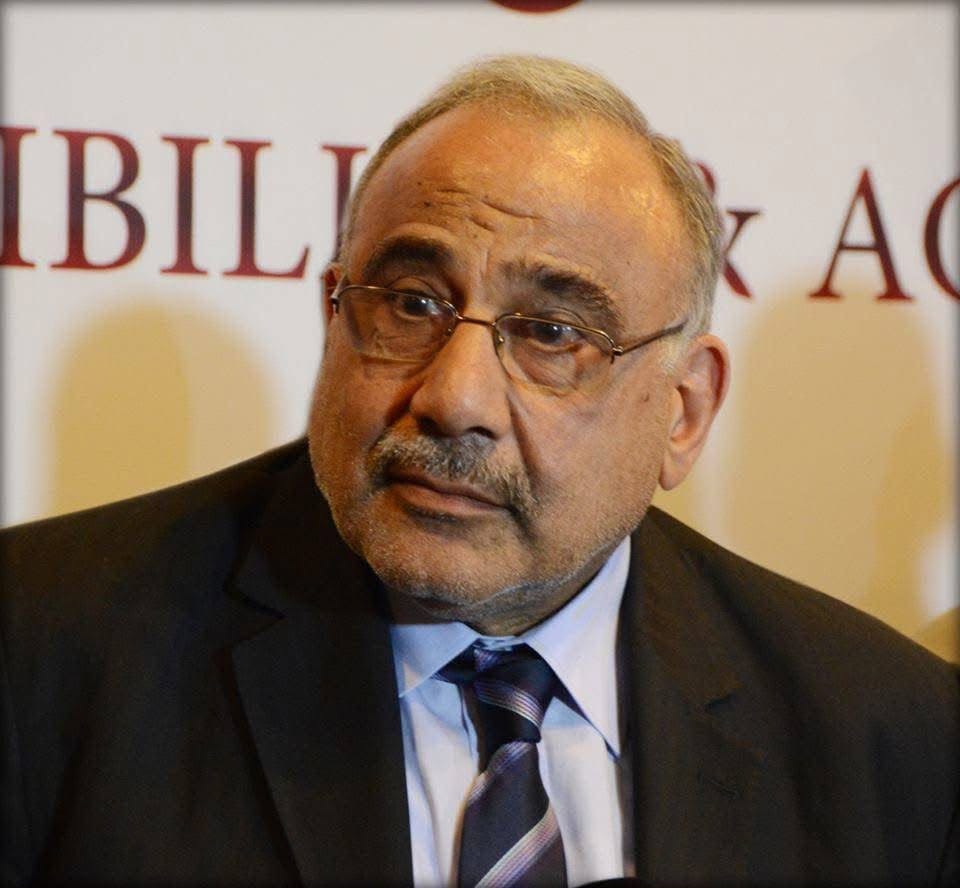
Adil Abdul-Mahdi
Former Prime Minister of Iraq
We often discuss the concept of the state based on imagined rather than real images. Every faction has its own perception and understanding of the state, through which it begins to judge its failure, success, or the factors promoting its establishment or collapse—as well as the encouraging or obstructing elements to achieve that. All this is done without identifying which state they are speaking about. Is it an imagined state in their mind that they seek to establish? Or is it the one existing elsewhere?
The term “state” as circulated among us is insufficient to define the essence of the modern state. Similarly, the intellectual projections that utilized the word “state” in certain applications known to our countries before the colonial era are insufficient to serve as normative rules for judging the concept of the state as we discuss it under our contemporary circumstances. The state back then possessed substances and meanings that differed from the concept of the modern state. Therefore, it is imperative to define the state we mean, so that we may objectively evaluate its experience in Iraq after 2003.
First: What is the Modern State?
The contemporary world has only known the concept and applications of the modern state through the application, import, or imposition of the “Nation-State” experience based on Western concepts. Its concepts were developed starting from the fifteenth century by numerous thinkers, including: Machiavelli (1469–1527), who separated politics from morality and made the state an end in itself; Jean Bodin (1529–1596), who consolidated the concept of sovereignty; Hobbes (1588–1679) and the idea of the social contract; Montesquieu (1689–1755), who established the idea of law and liberties; John Locke (1632–1704) and Jean-Jacques Rousseau (1712–1778), who developed the concept of the social contract to become the foundation of the civil state that protects individual rights such as the right to life, liberty, and property; and Max Weber (1864–1920), who founded the concept of “legitimacy” (the constitution), bureaucracy (institutions), and the sole entity authorized to use force within defined, internationally recognized national borders.
Therefore, the concept of a successful state—according to the Western vision, at least—requires:
- Respecting citizenship as a baseline, accepting the other as a political and social belief, respecting individual and public liberties, freedom of expression, majority rule, the peaceful rotation of power, and guaranteeing the right of the minority to turn into a majority in its turn.
- Protecting civil society institutions, non-governmental organizations, and mass media.
- The state serving as the protector of sovereignty and citizens, the representative of the people, the authority tasked with law enforcement, the power of courts and the judiciary, restricting the use of violence to the state to enforce order, and holding the decisions of peace and war.
- Being the guardian of what is called the politically, economically, and value-based free system.
- Keenness on the growing role of science, technology, public education, and the advancement of public health and social welfare institutions.
It must be emphasized that these matters are often evaluated by Western standards only, according to the historical development of the white race and the religious doctrine that evolved in Europe or the West. This popularized what has become known as “double standards”: one standard for the West and another for the rest of the countries. These descriptions of the state are real and have deep-rooted traditions in the West because they originated with it and are nurtured by real internal and external conditions. Conversely, they are often formal and superficial in dominated countries because they are mere imitations, imports, and processes of imposing applications and concepts for which the basic prerequisites do not exist. For instance, democracy in our countries was not established on deeply rooted traditions of contracting and pledge of allegiance (Bay’ah) as they historically evolved in our societies; rather, it was founded on imitating European applications and attempting to impose them through the elite upper crust of our countries.
All of this lies within the intellectual constructs of European philosophers, legislators, and thinkers, and what it led to regarding the reality of the state in the Western system. It is a vast effort, rich in ideas and practices. However, it coalesced with a reality that researchers and state-building practitioners in our countries often ignore—a reality that was a necessity for theoretical propositions and practical applications, indispensable for building the state in its modern concept in the West. This reality is represented by the white man leaving Europe to colonize the rest of the world’s continents, exploiting their resources and transferring them to the European continent to be the primary fuel for building his internal, and consequently external, renaissance. This began in the fifteenth century and reinforced the continuous development of the concept of the state in accordance with Western interests, especially during the twentieth century, and particularly after the 1950s. The strong, organized, ruling state taught in academic textbooks and international universities would not have existed if not for the colonial system, which was its primary feeder. The colonized external world was the goose that laid the golden eggs, without which the West would not have achieved its internal welfare, development, and stability. Thus, we are faced with two pillars, neither of which can stand without the other: the external factor on one hand, and its proper internal utilization on the other.
These are brief, practical references to remind those in our ranks who have forgotten or choose to ignore the role of old and neo-colonialism in the rise, maintenance, and development of the state in the Western concept during the contemporary era:
- Funding and Economic Expansion: The Industrial Revolution required external markets and cheap raw materials. The unification of colonial efforts, compared to competing companies, allowed the West the best organization to plunder the wealth of colonies to build Western societies and states.
- Renewal of Colonial Powers: This occurred through the rise of Anglo-Saxon power against the powers of the old continent. The need to control the seas to secure resources led not only to discovering new trade routes but also to acquiring experiences, skills, and sciences previously unknown to Europe, introducing them to sources of wealth that were previously distant. Thus, it was necessary to organize this process through colonial conferences—such as the Berlin Conference (1884) to partition Africa, the role of the East India Company in draining Asian countries, and other colonial institutions, meetings, and agreements like the Sykes-Picot Agreement and the Basel Congress (1897) to establish the Zionist entity—all to control West Asia and divide spheres of influence among Western nations, and so on.
- Completing the Ideologization of the Entire Western Dominance System over the Global Order: This was done by anchoring the concepts of “Enlightenment” and “secular-racial” principles, and the dominance of empirical experience, speed, machinery, and intellect as working tools—all according to Western standards and interests to destroy the working tools of other civilizations. This included the so-called “civilizing missions” under the pretext of civilizing the rest of the world’s continents. Even the socialist Karl Marx or the liberal John Stuart Mill wrote about the importance of the role of Western capitalist civilization in spreading civility to the barbarian and savage East. Another example is the French civilizing mission in Algeria under the slogan: “Catholics in France, Secularists in Algeria.” The origin of this slogan was to protect the deep, majority Catholic heritage in France despite the principles of separating state and church, while simultaneously using it to destroy Islam, which was the majority religion in Algeria. It also involved Social Darwinism to prove the superiority of the white race as a justification for subjugating other races, and Cartesianism (Descartes) and Kantianism (Kant) that cast doubt on values, ideas, traditions, and truth in favor of theories of skepticism, indulging instincts, and sanctifying individualism, the self, and the ego. These were the early foundations of destructive liberal tendencies that not only destroy other identities but also subjugate the collective and society for the benefit of the individual and the elite.
Western knowledge destroyed everything else and became the global totalitarian framework circulated by our generations, schools, and universities, even when it was erroneous, distorted, misleading, and offensive. If you ask anyone today: “Who discovered America?” they will tell you: “Christopher Columbus,” and we will tell them: correct. But the truth is that northern peoples, such as the “Vikings,” as well as Asians and Africans, reached the Americas via the North Pole, Siberia, and other routes hundreds, even thousands, of years before Columbus. The population of the Americas at the moment of Columbus’s arrival is estimated at 60–100 million people descended from other peoples, including the “Paleo-Indians.” Although this has become an irrefutable scientific and historical fact, we continue to repeat misleading Western knowledge and build upon it. This is a simple example of hundreds and thousands of examples across various fields of knowledge, affairs, and concepts circulated today among us and in the world. It is time we stop ingesting these intellectual and conceptual toxins and scrutinize the knowledge we circulate, its seriousness, and its credibility.
Global hegemony through all military, economic, value-based, political, and social means started from the Peace of Westphalia (1648), which ended the Thirty Years’ War in Europe. This is considered the actual foundation of the modern international system of hegemony based on the sovereignty of states, equality between them, the separation of religion from politics, and other concepts designated for European states that do not apply to the “barbarians” of the East and the rest of the continents. Then came the League of Nations (1919) as an organization for “civilized” states, which consecrated the dominance of the victors. Or the United Nations (1945), which reflects the new balance of power for the victorious forces in the war, keeping the final word in the hands of the former colonial powers.
This brings us to a fundamental and essential point that is often overlooked, which robs any research of its objective and realistic seriousness: The world, especially after the twentieth century, is no longer composed of adjacent or isolated states. Instead, it has become a single, integrated structure, framework, or system that works to serve one center at the expense of the other parties. A construction that has—in the final analysis—one leadership and one set of operating rules in the sense of mutual service, harmony, and identification, rather than in the sense of congruence, symmetry, and equality. It works toward unified goals. The problem that many forget or ignore is that the states of this world are no longer peer-to-peer independent states that can each make decisions and policies that suit its interests. Rather, everything has become linked to the extent to which those decisions and policies harmonize or conflict with what is called the “International System,” which in reality is the control and dominance of a minority of states over the rest of the world’s countries.
There are two contradictory systems:
a. The Hegemonic System of States: which constitutes the leadership of what is known today as the “International Community,” the “International Order,” “International Public Opinion,” or “International Legitimacy,” etc. Its goal is to serve and protect the interests of the dominant states, whose leadership alternates among a specific country or group of countries within it.
It is important to note a peculiarity that characterizes the world, and our region in particular: the integration of the Zionist movement into the dominant colonial project on one hand, and the planting of the Zionist entity in the heart of the West Asia region on the other, at the expense of the interests of our countries, our region, and our peoples, including the Iraqi state.
b. The Dominated System of States: which, regardless of the national interests it serves, remains in the final analysis held, besieged, and forced to serve the requirements of the dominant system. This frames its security requirements, its development models, and its internal systems, and leads to interference in its values and policies—not only foreign policies but, to a large extent, internal ones as well.
According to this vision, the rise of the state in the West has built “normative models” of a successful state that is acceptable for classification within their system. Consequently, all other formations are either “service models” with a specific function in the global totalitarian system built by that leadership for its own benefit, “failed models,” or “rogue/hostile models” when they partially or fully exit its control. Iraq—before 2003, after it, and up to the present day—falls within this framework, even if the regime and its role in managing the state internally and externally have changed.
Second: The Iraqi State
After these brief references to positioning Iraq and its state within the framework of its national, regional, and global situation, we can speak more objectively about evaluating the Iraqi state after 2003. What happened in 2003 was a significant event that occurred in the context of the push-and-pull in the rise and fall of international system powers and the resistances it faces from its former colonies across different continents. Iraq remained a strategic area, a strategic corridor, and a rentier state within the international system, serving the supreme interests of the global order in exchange for oil revenues whose gateways and mechanisms are controlled by the powers and organizations of that same system.
In the 1950s, Iraq was part of the “Baghdad Pact,” whose collapse represented a decline in the role of the United Kingdom as the leader of the global system at the time, and the rise of the American role after World War II. And with the eighties of the same century and the victory of the Islamic Revolution in Iran in 1979—which the West viewed as a threat to its interests—Iraq was used as a frontline gateway to attack Iran, which had just liberated itself from the Shah’s regime. That regime had been considered one of the most important American pillars in our region, including for Zionist interests.
Prior to this, the process of gradual control over the region by the United States had begun: the coup against the democratically elected Mossadegh in 1953, the “50-50” principle for distributing oil resources with Saudi Arabia, and standing against the Tripartite Aggression on Egypt in 1956 to end the era of British/French leadership and hegemony. With American control and the increasing Zionist influence on the US administration, Israeli expansion grew: the 1967 war, the 1973 war, and the invasion of Lebanon in 1982. By the beginning of the nineties and Operation “Desert Storm,” American control transitioned into a broad military presence. Later, this moved toward an open and explicit occupation, as happened in Afghanistan after September 11, 2001, and in Iraq in 2003.
During these developments, the influence of other countries in the Western camp declined, and they became, in general, appendages to American and Zionist policies, especially after the collapse of the Soviet Union. Military bases were established in most countries of the region, including Iraq. Although these bases were set up under the pretext of protecting the security of these countries or fighting terrorism, they were, in reality, part of the regional and global American/Israeli security network, primarily directed against Iran and the forces rebelling against the will of the global hegemonic system and the Zionist entity.
Third: State Options After the 2003 Change
Recalling these developments is crucial for placing the 2003 experience in Iraq in its correct context. Thus, talk of removing Iraq from the circle of conflict is either a fallacy hiding a real motive—a “word of truth used to serve a falsehood”—intended to fight Iran medially and politically in favor of the dominant powers, or an immature leap over historical and objective facts.
Iraq was and remains a major arena and a primary target of the conflict. Ending the conflict within it—if it were serious and possible—would be a historical victory for it, as it would mean one single truth: the end of the American, Israeli, and Western presence therein, which is the primary dominant presence and the cause of its dependency, deadlocks, and chronic structural crises. Everything else is merely a reaction to it. This presence preceded the Islamic Revolution in Iran and accompanied it by encouraging the former regime to fight it. This was the primary goal of occupying Iraq after the former regime failed to achieve that task, despite all the support it was provided.
At the beginning of its presence, the occupation declared its intention for a long-term stay in Iraq. The initial slogans of the “Coalition Provisional Authority” under Ambassador “Bremer” were “Society Building” and “State Building.” This was confronted by the Religious Authority, Grand Ayatollah Sayyid Al-Sistani (may his blessings endure)—along with many political and resistance forces—who rejected the occupation, opposed the “electoral caucuses” projects, and called for the drafting of a constitution by a national assembly directly elected by the people, followed by a public referendum.
This task was accomplished with great success, leading to a new system that possesses its share of freedoms, rotation of power, and clear improvements in living standards, yet suffers from its share of deadlocks, crises, and manifestations of corruption. Furthermore, the process of ending Iraq’s status as an occupied territory—which was an international decision—was completed. Iraq reclaimed its sovereignty, even if formally. Efforts also advanced to remove Iraq from the provisions of Chapter VII, and the withdrawal of multinational forces was achieved in 2011.
We were strong in opposition but weak in construction. The new leaderships were primarily preoccupied with occupying positions within the state and did not give the necessary attention to the process of rebuilding society and the state. Thus, from the beginning, we lost the essential components required to accomplish this mission. By this, we mean the absence of an elite that is conceptually and practically aware of the requirements for a society-and-state-building project within the real objective and historical circumstances—globally, regionally, and nationally—rather than assumed or imagined ones. We also lacked the political and popular forces necessary to support such an elite in succeeding in this foundational historical challenge. This imposed contexts and dynamics that can be summarized as follows:
- The return of foreign presence and the establishment of military bases after foreign forces were invited under the umbrella of the International Coalition in 2014 to fight terrorism following ISIS’s occupation of Mosul and its advancement in several Iraqi provinces. It is worth noting that during the period preceding this, we did not strive to liberate our economy and foreign policy from many of the elements of dependency that shackle our system.
- Due to the intellectual and conceptual vacuum, we began raising slogans for state-building borrowed from the Western experience, without possessing the prerequisites for their application. Consequently, those slogans and the forces raising them became facades hiding behind them various forms of influential authorities for power-sharing, at the expense of a series of deviations in various administrative, economic, and security affairs, as well as in foreign relations.
- The nationalistic and independent tendency of the Supreme Religious Authority, and within the ranks of the people and many political forces and elites, prevented the building of a puppet state that serves the global hegemony system entirely—as is the case with many countries in the region that purchased a temporary present whose facade is built on fragile security and superficial, temporary prosperity at the expense of an advanced and sustainable future, the reality of which is based primarily on self-reliance, the country’s capabilities, its spaces, and its regional extensions. Opposing this tendency is the presence of strong internal currents within all the country’s components, including various segments of the people, who have been drawn—explicitly or implicitly—into surrendering to colonial and Zionist projects.
- The absence of state and society building led to the emergence of numerous authorities with different contents, diverse components, and multiple arenas where the negative and positive intersect. The dynamic shifted from the state (governments, authorities, and their forces) to society with its various forces, and from the institutional and conceptual paralysis of the “system” and the collision of its forces to a kind of “non-system” with its various positive and negative activities. Despite the spread of corruption in many sectors, much chaos, and the “one step forward, one step back” progression alongside many frustrations, we have also seen many achievements. Iraq, in general, is advancing through the general momentum generated by the process of liberating its people’s will after 2003, and through the momentum Iraq possesses due to its location and wealth, which pushes many forces forward, whether they are conscious of their role or not.
The Three Options
The evaluation of the state experience after 2003 has placed Iraq between three options:
First: The Worst Option: This involves adopting the colonial and Zionist policies intended to be imposed on the country, such as deepening the economic exploitation of the nation, imposing development models that increase the country’s attachment to the colonial wheel, implementing normalization projects with the Israeli enemy, maintaining foreign troops, or submitting to the policies of the U.S. Treasury and Israeli and Western pressures. It also includes raising slogans that are correct in principle but misleading in terms of timing and objectives—desired by the Americans and Israelis—to incite internal strife, hostility toward our neighbors (especially Iran), or to besiege the Popular Mobilization Forces (Hashd al-Shaabi) and the resistance forces defending the state and its political system.
Restricting weapons (to the state) is a right of the state only when it possesses full sovereignty and capabilities, especially the ability to protect the homeland and its citizens. It is not appropriate to open this door or incite this strife before resolving the issue of arms restriction in the presence of U.S. and NATO forces, or preventing American and Israeli aircraft from using Iraqi airspace to attack Iran, assassinate Iraqi citizens, or bomb the headquarters of the Popular Mobilization Forces. Nor should it be raised before resolving the issue of the Turkish military presence, or the presence of the PKK and other foreign Iranian and Syrian factions in the country. Furthermore, this must be preceded by resolving the issue of weapons held by Iraqi groups—whether Kurdish, Shiite, Turkmen, Sunni Arab, Yazidi, or from other components—that operate outside the plans and orders of the state and the federal government.
It is worth noting that the right to bear arms and form militias is a right guaranteed by the U.S. Constitution to its citizens, which states: “A well regulated Militia, being necessary to the security of a free State, the right of the people to keep and bear Arms, shall not be infringed.” Raising this issue among us while legitimizing it for themselves, and targeting specific groups that support the state but oppose colonial and Zionist policies, reveals the negative mindset of some in our ranks and the double standards and political hypocrisy of colonial and Zionist powers.
Second: The Best Option: This is to break the shackles of dependency, liberate ourselves from its constraints, and confront the Zionist entity to move toward full and complete independence—on security, economic, political, and value-based levels, both nationally, regionally, and globally. However, this option involves great sacrifices and requires not only a leadership and a national formula that enjoys the required degree of national unity and clarity in philosophy or conceptual reference to proceed successfully on this path, but it also requires significant social and popular support that can withstand the pressures the country will face.
Third: The Oscillating Option: The lack of conditions for the “Best Option” does not mean not working toward it. Rather, the entire responsibility lies in striving to achieve it and exploiting all positive national, regional, and international circumstances for that purpose. Just because the conditions are not fully available does not mean they are entirely absent. As the saying goes: “What cannot be achieved in its entirety should not be abandoned in its majority.” None of this precludes having reform programs to serve citizens, build institutions, and adopt policies that minimize the harms of dependency, raise the level of independence, stand with just causes, and never surrender the country to foreign will or submit to Zionist and colonial conditions as some countries have done.
Summary: The Possibility of Transitioning from Oscillation to the Best Option
It was possible to bring about a fundamental change in the country’s leadership and unify its directions after the change process; the discussions on drafting the constitution were a golden opportunity for that. There was great national momentum and large, good alliances among many forces, especially within the framework of the demographic majority and with the Kurdish situation. However, the absence of the western arena represented a major flaw. This also disrupted the process through:
- The preoccupation of the majority with occupying positions and neglecting fundamental tasks.
- The immersion of the Kurdish situation in nationalist theory and the lack of a serious effort to adapt it to its surroundings.
- The reaction of the western regions to the new situation due to their sense of grievance over losing the country’s leadership; consequently, significant parts of their communities and areas became a hotbed for terrorism, and they presented both just and unjust demands to other components and forces, which disrupted the general context, in addition to the wide-scale terrorist acts that threw the country and its people into turmoil. This weakened the social contract and caused the movement toward building the state and society to lose the necessary momentum. Consequently, the country was submerged in all forms of crises and interventions.
Because societies—like nature—are not driven only by the factor of direct consciousness, but also by long-term factors and external elements that have their own consciousness and contexts outside our direct awareness; therefore, we see in our current situation in the year 2026, that the dynamics of the solution will be primarily driven by ongoing regional and global changes, rather than the dynamics of internal forces. This is something we have witnessed many examples of throughout history. European countries, for instance, did not all rise at once; rather, the change was led by a few countries, which later pulled the rest of the states along with them.
Similarly, after the collapse of the Soviet Union, many Eastern European countries did not build their societies and states through internal effort alone, but through dynamics imposed by the requirements and privileges of joining the European Union. Likewise, after the oil shock in the 1970s, the massive oil wealth did not only develop the oil-producing countries, but also contributed to funding, developing, and bringing about changes in non-oil-producing countries as well.
Iraq belongs to Asia and the East, and to the Arab and Islamic spheres. For this reason, visible and invisible dynamics will appear later and gradually with the ongoing regional and global developments:
Regarding the first affiliation with Asia and the East, we are witnessing that more than 80% of Iraq’s exports and imports, which used to come from the West, have begun to come from the East, which is rising in its economic, scientific, and organizational renaissance and is advancing ahead of the West in many fields. This is accompanied by the development of political, value-based, environmental, and even security relations with the environment of Eastern countries and societies. Just as Iraq was linked economically, politically, and in terms of values to Western developments, especially since the beginning of the twentieth century, we will certainly witness developments that link it more to the East through relationships whose content lacks policies of hegemony, exploitation, and imposition. This will increasingly allow for the achievement of what we consider the “Best Option” for our country and our people.
In the second affiliation, the Arab and Islamic one, we are witnessing unprecedented courage and a renaissance in Palestine, Lebanon, Iran, Yemen, and among many peoples of the region toward confronting the Israeli enemy and strengthening the national independence of the region’s countries. The recent wars taking place at various levels across all countries of the region are evidence of the rising spirit of resistance and accomplished change, and the desire to establish systems that differ qualitatively from the old dependent systems. The steadfastness of the Axis of Resistance and the failure of the aggression against Gaza, Lebanon, and Iran to achieve its declared goals is a historical turning point that will inevitably change the region’s geographies and the core substance of its systems. This is something that will impose itself as a fait accompli, just as colonial substances and geographies once imposed themselves as a fait accompli upon us.
Perhaps the decisive factor that many overlook—a major structural and existential factor—is the aging of the hegemonic system and the disintegration of many of its pillars and historical elements of power, after losing its colonies and the primary sources of its prosperity. This is accompanied by the decline of the Zionist project, the shift of battles to the interior of the occupied territories, and the transformation of the Zionist entity into a pariah state, with international condemnations pursuing its officials criminally on charges of genocide, apartheid, and crimes against humanity. When wars become the sole means to maintain the prevailing dominant system, it means that the system is disintegrating and collapsing.
The concept of a “System” and sustainable power are based on stability, peacefulness, non-war, and increasing, superior productivity to yield returns and surpluses. These allow the system to achieve expanded cycles of growth and progress, internal stability within its society and center, and the possession of external sources of power and hegemony. Conversely, “Imperial overstretch,” perpetual war, chaos, instability, savagery, and indiscriminate killing usually lead to the erosion of the center’s assets, values, and foundations. This constitutes the greatest drain on the power that enables hegemony and the largest dismantling process of the elements and concept of a “System,” eventually leading to others advancing over it and its ultimate collapse.
This is how the Assyrian, Eastern and Western Roman, Sassanid, Mongol, Napoleonic French, German/Austro-Hungarian, Ottoman, Hitler’s Germany, British, and Soviet empires collapsed when they expanded beyond their limits and drowned in their wars, expenditures, and debts, failing to meet the requirements of their hegemony and power.
In the case of Western capitalist hegemony, alternatives used to emerge from the same nature of the system. Now, however, the alternatives are emerging from the system’s former colonies. Therefore, the conflict will remain wide open against the interests of the prevailing system. According to all indicators shown by Western sources themselves, colonialism, racism, and Zionism—through their extremism, recklessness, and the intensity of their crises within their own centers—are accelerating the process of disintegration within their system. This allows for reconstruction and reconfiguration both internally and externally, occurring cumulatively and gradually until the moment of quiet dissolution or violent explosion. This will enhance the possibility of ridding ourselves of many of the “cancers” we suffer from, provided that the basic conditions are met to rebuild our societies and states on the correct foundations that fulfill the aspirations and circumstances of our peoples, on the condition that we prepare ourselves for a complex and serious stage.
Disclaimer: The views expressed in this article reflect the opinion of the author and do not necessarily represent the opinion of the Iraqi Group for Foreign Affairs.
- The reaction of the western regions to the new situation due to their sense of grievance over losing the country’s leadership; consequently, significant parts of their communities and areas became a hotbed for terrorism, and they presented both just and unjust demands to other components and forces, which disrupted the general context, in addition to the wide-scale terrorist acts that threw the country and its people into turmoil. This weakened the social contract and caused the movement toward building the state and society to lose the necessary momentum. Consequently, the country was submerged in all forms of crises and interventions.