Before It Is Too Late
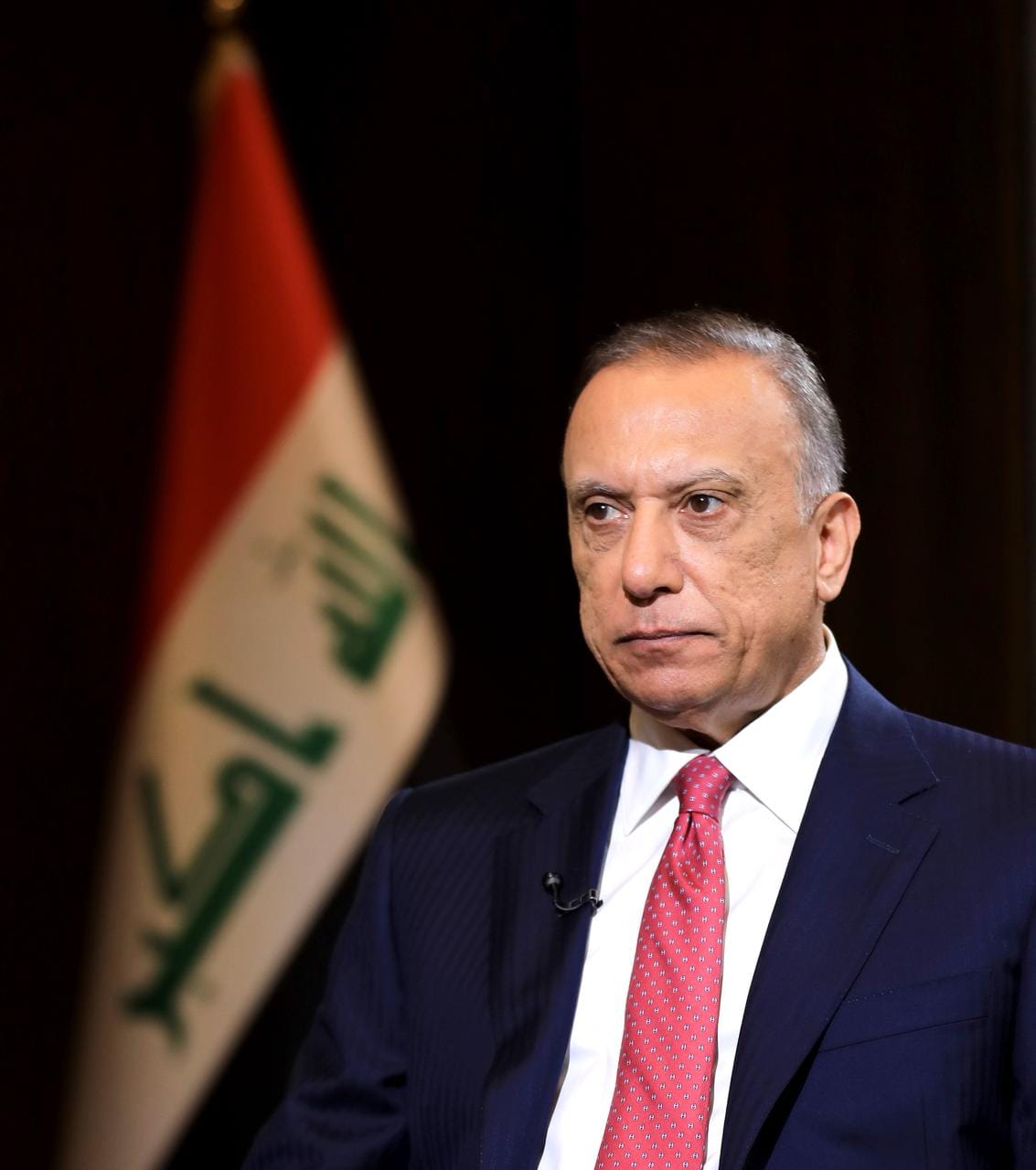
Mustafa Al-Kadhimi
Former Prime Minister of Iraq
“All things are exactly as they have been since eternity; they begin and return again in cycles, and it makes no difference whether a person sees the same scene for a hundred years, or two hundred, or an infinite number of years.”
Marcus Aurelius
On the twenty-third anniversary of the fall of the former Ba’ath regime, and the rise of democratic Iraq, I write these words, as a necessary response to our dear brothers in the “Iraqi Group for Foreign Affairs.” What we need in our democratic Iraq is courage in presenting our convictions before one another, and that we listen to each other—not merely hear—and that we review and learn so that we do not reproduce the same mistakes. Most importantly, that we respect the other and accept him even if we disagree with him to the point of dispute.
What the Middle East is witnessing today of a mad conflict is a natural result of a long chain of intertwined events that took place approximately twenty-five years ago; September 11, 2001, and the invasion of Afghanistan (October 7, 2001), then Iraq (April 9, 2003). The beads followed one another, and the stage of events expanded in a region that historically formed the “heart of the world,” but—unfortunately—Iraq was the most prominent field, as a ground or stage for clashes, settling scores, and passing messages, without succeeding in moving from being affected to being influential, or in pushing toward initiative, remaining committed to the limits of a role carefully drawn by forces that excelled in investing in the space of diversity and contradictions.
After all this time, and in the midst of this raging war, and what Iraq in particular is witnessing, and despite repeated calls and previous appeals, which began with questions that necessitate review, then frankness, and then reconciliation, in a way that would spare the homeland, the citizen, the state, and its institutions the repercussions of a similar moment, we find ourselves—all of us as Iraqis, with our different orientations—before a historic national moment that imposes an honest pause with ourselves, in which we undertake a responsible review of our political experience with all that it carried of achievements, gains, failures, and challenges.
We have come a long way in the path of building the institutions of the state that we dreamed of during our opposition to dictatorship, and we have also witnessed positive transformations, such as the expansion of the margin of freedoms and the emergence of a popular movement that demands reform, especially in recent years, and this reflects the growing societal awareness that believes in the necessity of change, and pressures toward correcting the course. But—at the same time—we cannot ignore the absence of security and stability, which has disappointed the aspirations and ambitions of our people. Unfortunately, there are still real disparities and imbalances in the structure of the state and its relations internally and externally, in addition to the ongoing political disturbances, and this has negatively reflected on the relationship of the state with society and the relationship of society with it, which calls for a fundamental, serious, and courageous treatment.
The post-2003 phase was supposed to constitute an opportunity to build a new social contract, based on citizenship, justice, and the rule of law. However, the political elites, in many cases, presented their partisan and personal interests at the expense of the national interest, and translated that into politicizing institutions, weakening transparency, the spread of corruption, the abuse of influence, and the marginalization of competencies, which hindered the building of a true state of institutions that we all want, in loyalty to the sacrifices made for Iraq and its people.
The “fathers of the political process” were not able to draw lessons and lessons from previous foundational experiences. They inherited a state burdened with an authoritarian legacy, but instead of rebuilding its institutions on comprehensive national foundations, they reproduced some of the old mistakes in new forms; sectarian and ethnic quota systems were entrenched as a mechanism of governance, the concept of the civil state was weakened, and division was entrenched instead of unity.
In this context comes the challenge of the duality of the national decision, and it is manifested in the presence of weapons outside the framework of the state and its authority. At its core, the state is based on a clear principle that does not accept ambiguity: that it is the only entity authorized to monopolize the decision of war and peace, the unity of arms, and to regulate its use according to the law. Any departure from this principle, whatever its justifications, weakens the prestige of the state, confuses the national decision, and affects the citizen’s trust in its institutions. Iraqis have the right—indeed, it is their duty—to raise their concerns loudly, even retroactively: Why did this weapon come? From where, and how, and who allowed its expansion and empowerment? What are the repercussions of its existence on the sovereignty of the homeland and the unity of the state’s decision? And how do we build a strong state in light of multiple sources of power, if all instruments of power are not under its authority? These are not controversial questions, but foundational questions, and through answering them we can preserve our Iraq and its position, and build a future commensurate with hopes, ambitions, and sacrifices.
It is true that the ongoing war has revealed what we had previously warned about, but even if it had not occurred, we would have reached a complex crisis; the issue of weapons cannot be dealt with as a partial issue or a separate security file, but rather it is a complex matter in which multiple dimensions overlap: political, economic, and security, and it has direct repercussions on the state, and the image of its national, economic, and social security.
Approaching this file requires a deep understanding of its roots, which do not begin only from the security and political reality, but extend to the structure of society itself, and to the conditions that Iraq went through during past decades, which contributed to shaping different convictions about the role of weapons and their function. Therefore, reducing this issue to one side without another, or dealing with it superficially, will only lead to more complexity.
Part of the experience
Between 2020 and 2022, I assumed the presidency of the Council of Ministers, during very difficult months in the life of our modern democracy. The issue of weapons—for me—was a top priority, not from the standpoint of confrontation with the armed factions and militias spread across the Iraqi geography, but stemming from a firm conviction that the moment of truth, or confrontation, was inevitably coming between the camp of the United States of America and the camp of the Islamic Republic of Iran. The sanctity of Iraqi blood—for me personally—was above all consideration, for nations are built when the human being is preserved. I did not distinguish between one martyr and another; everyone who rose for Iraq is worthy of appreciation and respect. Every stage, station, and turning point in our history—especially after 2003—requires a calm reading, knowledge of the circumstances and contexts, understanding of intentions, and awareness of the approaches presented at that time, and proceeding in analysis until reaching conclusions governed by (good faith) in our partners in the (homeland). At the same time, this does not mean abandoning a fundamental issue, which is building the state and its institutions, imposing its prestige and presence, and enforcing the justice of the law, in favor of a political interest here or a narrow gain there.
The parallel weapons to the state’s weapons constituted an existential threat to the idea of the state and its concept, which imposed upon me personally—by virtue of national responsibility and the historical moment—the necessity of devising a solution that preserves civil peace from any internal fighting first, protects Iraqi blood—youth and leaders—second, and spares the country and the people the consequences of any potential confrontation that might have occurred at that time third. These determinants imposed proceeding on two parallel tracks: containment and confrontation, while maintaining—in both cases—the discourse of the state, without entering into empty quarrels and debates, and staying, as much as possible, away from working with slogans and populism, and sufficing with silent work for Iraq and its people, which had its effects, by the testimony of all, despite all campaigns of demonization and systematic defamation.
The approach in these two tracks was based on the necessity of separating between the leaders of the armed factions and the active militias, and the youth affiliated with them. The main reason in formulating this approach was to affirm belonging to the state and its institutions, and that the latter is the sponsor and responsible for all of us. We worked on the necessity of combining—according to the situation and circumstance—between the tracks of containment and confrontation. Events took place and others occurred, some of which were announced and some remained undisclosed for reasons that will come a day when we reveal them; and the main concern was not to drag the country into a bloodbath, at a time when it seemed clear that there were those who were strongly pushing in this direction, holding me—and my government—responsible for that.
In his book “The Art of War,” the great Chinese leader says: if the orders are clear and there is failure in execution, then the fault lies with the soldiers; but if the orders are not clear, then the fault lies with the leader. This very important saying summarizes much, and it contains sufficient indications and clear signals that explain why the state and its institutions failed to confront the movements of the armed factions and the militias active at the moment of confrontation. In short, the orders were clear, but—in a highly complex country—there are those who prefer “withdrawal” over “advancement,” without any regard for the directive or the military order, but rather in line with a political interest, or otherwise, and thus the interest of the homeland disappears, and the Commander-in-Chief of the Armed Forces turns into a person lacking tools, limited in options, restricted in steps. This necessitated a comprehensive evaluation of the approach, the plan, and the tools, with the aim of sparing Iraq any explosion or bloodbath, as a result of an internal or regional conflict.
The scene was clear before my eyes, and I expressed it in a speech I delivered in the city of Sulaymaniyah (October 2022): “Let us adhere to dialogue, dialogue, dialogue… and nothing else, for it is our only path to resolving the crisis, otherwise the fire will burn everyone, God forbid.” Some interpreted this message at the time as relating to the local political conflict, but whoever reviews that period at the regional level understands well that the region was heading, rapidly, toward a moment of major explosion, and that Iraq would not be immune from it. This expression was preceded by another statement in the summer of the same year: “A thousand days of dialogue are better than a moment in which blood is shed.” I believed that serious, calm dialogue, which guarantees the interest of the state and protects the dignity of our youth, is the only way to resolve this crisis, far from the talk and statements that we have experienced over the past months, which have proven to be empty and unrelated to reality, especially since some of those who rejected weapons publicly, based on their interests, were—secretly—aligning with the economic requirements of the weapons, in a clear (transgression) against the state and its institutions, and a blatant violation of an idea for which we worked with all sincerity and dedication, which produced an active diplomatic presence for Iraq on the regional arena.
It is regrettable that those who attacked Al-Kadhimi and his approach previously have today returned to adopt it, which confirms that the problem—at that time—was not in the nature of the proposal and the approach, but rather in some people’s view of the one who proposes and approaches and takes the initiative to draw rescue plans before it is too late. For the record, that does not matter to me; what matters is that Iraq remains, that we preserve its interests, and that we place them above all private and narrow interests.
The economy and weapons are opposites that do not meet
Over the past weeks, there has been talk in Iraq about our economic situation and its outcomes; it is not reassuring if it continues as it is, and the ongoing war has increased its fragility, and will contribute to exposing it. The large expansion in the public sector, and the continued reliance on a non-productive economic pattern, lead—if they are not addressed—to serious imbalances that may reach the point of explosion. This requires us to move with a clear economic vision, based on streamlining the public sector, expanding the role of the private sector, and building an economy capable of growth and sustainability.
However, the private sector does not grow in a vacuum. It needs a stable environment, trust, and a state capable of enforcing the law, ensuring security, and protecting investment. The foreign investor, in particular, does not look only at opportunities, but at the level of risks. In the presence of weapons outside the framework of the state, these risks remain high, and trust remains limited, no matter what capabilities are available. Hence, addressing the issue of weapons is not only related to security, but is directly linked to the future of the national economy. The more we succeed in organizing this file, strengthening the prestige of the state, and enforcing the law, the more we will be able to open the door to investment, rebuild trust, and place the economy on a different path.
Accordingly, addressing this dilemma is no longer a political option, but has become a national necessity dictated by the nature of the phase we are going through. These are not separate issues from one another, but are organically interconnected. We cannot build a strong economy in an unstable environment, and we cannot achieve real stability without a state capable of imposing its rules.
Possible reform
From here emerges the need to launch a comprehensive and productive national dialogue, not based on exchanging accusations or recalling divisions, but on honest and responsible transparency, and pushing toward devising radical solutions to this dilemma. A dialogue in which we do not wait for external sponsors to make it succeed, but rather a purely national initiative from the responsible leaders and concerned parties, placing Iraq’s interest first, and aiming through it to evaluate the experience objectively, diagnose points of failure, and move toward real reform that restores the state’s prestige, role, and status, and frees it from the idea of dependency to the idea of bridging relations, strengthening presence, and building a role.
This dialogue proceeds from constants that are not disputed, foremost among them that sovereignty is indivisible, that the law is the supreme reference, and that the state is the umbrella that includes all its citizens without discrimination. It is a dialogue that—for the first and last time—would rebuild trust between the citizen and the institutions of the state, through establishing justice, enhancing transparency, and ending all manifestations of duality that have weakened the state, its institutions, and our political system. This path is not an attempt at undermining or demolition, but rather a necessary step toward correction and construction. States are not built in one stroke, but through continuous reviews, sincere will for change, and a constant readiness for everyone to bear national responsibility in critical moments. This requires courage in presenting ideas, sincerity in intentions, and readiness to make concessions for the sake of the homeland, not for any other consideration.
Iraq today is in need of a new national contract that redefines the relationships and concepts that are still subject to problem and debate, foremost among them the relationship between the state and society, with the aim of establishing a phase based on stability, the rule of law, and respect for institutions. A contract that ensures that weapons are in the hands of the state alone, that the decision is purely Iraqi, and that the dignity and security of the citizen are at the core of the priorities of governance.
It is an open call to all Iraqis—leaders, officials, and political, academic, and societal elites—to sit at one table and move toward a new phase whose title is: one state, one weapon, and an independent national decision. This is a call that may not be heard by those who carry rifles, rockets, and drones, but it is directed to the rational who realize well that the opportunity for rescue and success still exists before it is too late; if we succeed, Iraq can regain a lost role, carrying a reform project that can impose itself in an arena that is being rearranged, thus becoming influential rather than affected, transferring its reform experience to countries that suffer from similar crises and need sincere efforts to address them. But if we fail, regret will not be of any use.
Note: The opinions expressed in the article represent the author’s point of view and do not necessarily reflect the opinion of the Iraqi Group for Foreign Affairs.